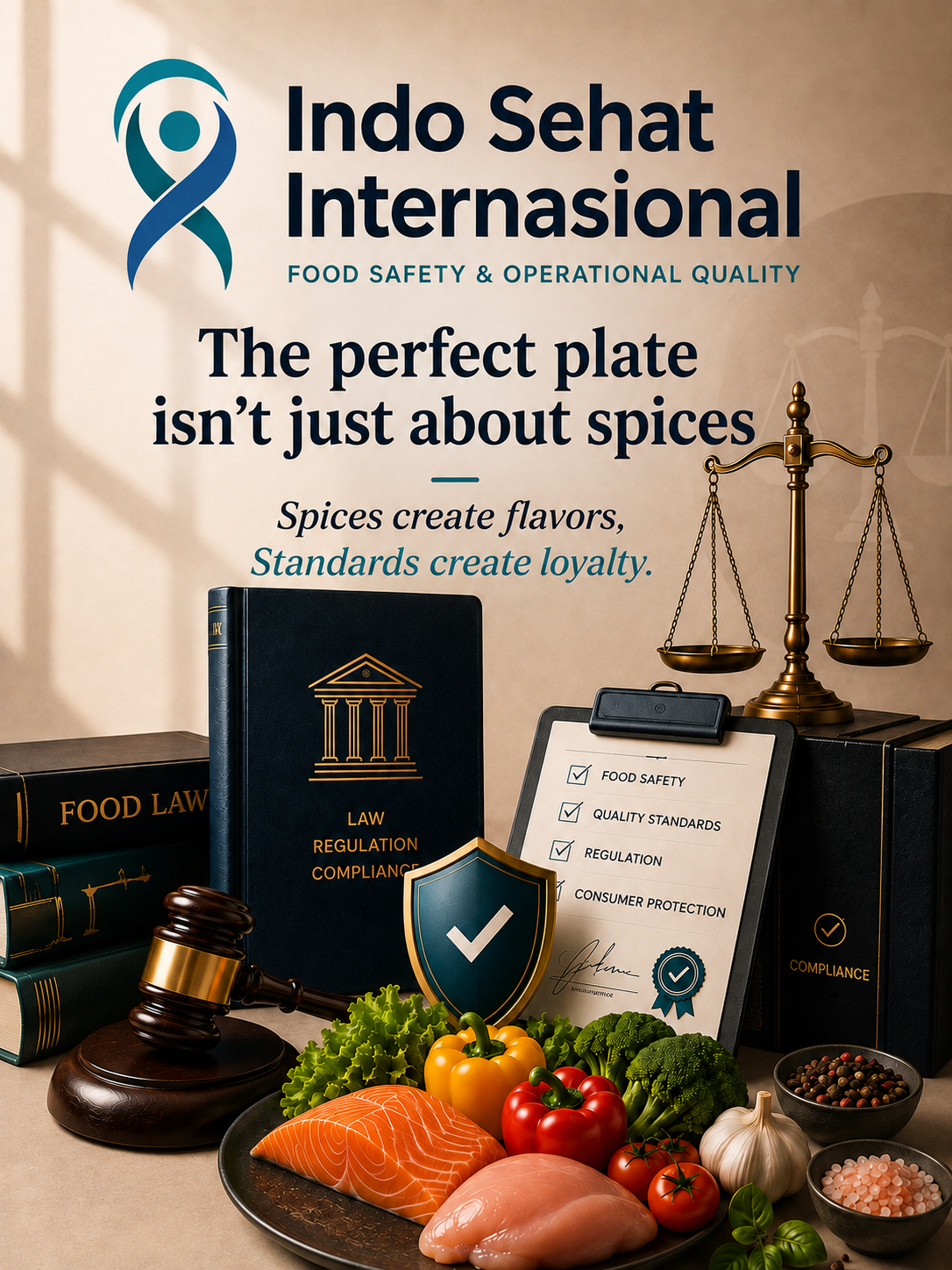
Legal Aspects of Our Activities
"The perfect plate isn't just about spices"
Spices create flavors, Standards create loyalty.
It is the major pillar of regulation. It defines food safety as the prevention of biological, chemical, or physical contamination that could harm human health.
- Food hygiene: Requirement of absolute cleanliness during processing, storage, and transportation.
- Food additives: Strict control and inspection of permitted doses and types of additives.
- Genetic engineering: Obligation to obtain a food safety permit before distributing any genetically modified product.
The government has significantly strengthened its controls through Government Regulation No. 1 of 2026, which amends Regulation No. 86 of 2019.
Strict Risk Management
- Increased traceability and monitoring from producer to consumer.
Combating Unhealthy Food
- Mandatory reformulation of products to reduce salt, sugar, and fat.
- Mandatory front-of-pack nutritional labeling.
Enhanced Import Controls
- Stricter administrative penalties for non-compliant products.
Under Law No. 33 of 2014, Halal certification became mandatory for applicable food and beverage products sold in Indonesia.
- Products must clearly display their halal status.
- Any mention of pork derivatives or allergens must appear in Indonesian (Bahasa Indonesia) on the label.
The Indonesian regulatory framework, reinforced by Government Regulation No. 1 of 2026, provides administrative sanctions for non-compliance.
- Product recalls and destruction of stock at the importer's expense.
- Temporary suspension of business activities.
- Permanent revocation of the marketing license (Izin Edar) and closure of the importing company.
Dangerous Foods
Intentionally distributing food containing contaminants harmful to human health may result in up to 5 years imprisonment and a maximum fine of 10 billion IDR.
Lack of License
Selling processed foods without a valid BPOM number may result in up to 2 years imprisonment and a fine of up to 4 billion IDR.
Fraudulent Halal Labeling or Claims
Providing false nutritional information or falsifying halal status may result in severe criminal prosecution for consumer deception.